What Is Included in a Professional Defensive Driver Training Course? (Modules, Assessments & Real-World Skills Breakdown)
A blog site of our Principal Consultant, Major Frank TK Tan, PMP (Perak), PJK (Selangor), on his thoughts and years of understanding in the world of Occupational Safety and Health.
The flashing hazard lights of a company vehicle on the side of a highway represent more than just a disruption. It’s a story of appointments missed, deliveries delayed, and a team member put at risk. For many organisations, the solution seems simple: send drivers for a quick training course. However, true road safety excellence isn’t achieved through a simple tick-box exercise. It demands a deeper, more strategic approach that goes beyond basic road rules. This article explores how our defensive driver training course builds a truly effective safety programme, moving from mere compliance to creating a culture of proactive, defensive driving. We will look into diagnosing driver behaviour, integrating psychological techniques, and leveraging data to create a programme that protects your people and your business.
More Than Just Rules: Crafting the Right Programme
An effective defensive driver training course begins with a clearly defined scope. It’s not enough to simply re-teach the highway code. Our approach is built upon an internationally recognised foundation: the curriculum and module structure from the National Safety Council (NSC) of the USA. This isn’t just any framework; it’s backed by extensive research and studies that highlight the most important aspects of modern traffic safety. By starting with this proven structure, we ensure that every participant receives essential, world-class knowledge on defensive driving principles. This forms the bedrock upon which we build a more customised and impactful learning experience for every driver who joins our sessions.
Getting to the Heart of the Matter: Driver Psychology
Have you ever wondered why even experienced drivers sometimes make poor decisions? The answer often lies not in their technical skill, but in their mindset. Complacency, overconfidence, stress, and distractions are the invisible risks that lead to tangible accidents. A top-tier defensive driver training course must diagnose these behavioural challenges head-on. We integrate cognitive and psychological techniques to help drivers understand their own habits and triggers. It’s about building self-awareness. We guide participants to recognise when they are becoming complacent or distracted and provide them with mental tools to refocus. This psychological element transforms the training from a simple driving lesson into a powerful lesson in personal risk management, creating safer habits that last long after the course is over.
Making It Real: Customising for Malaysian Roads
An international curriculum provides a strong foundation, but it must be adapted to local realities to be truly effective. Driving in Kuala Lumpur is vastly different from driving in rural America. This is where our customisation process becomes crucial. We tailor our internationally recognised programme to fit two key aspects: the unique challenges of Malaysian roads and traffic conditions, and the specific accident and incident history of your company. By analysing your internal data, we can focus on the types of events that are actually happening to your team. When trainees learn from scenarios involving their own colleagues and familiar routes, the lessons become deeply personal and relatable, which strengthens engagement and ensures the learning sticks.
Practice Without Peril: The Role of Simulation and Data
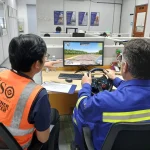
How can a driver practise reacting to a sudden tyre blowout or an unexpected vehicle cutting them off without putting themselves in real danger? This is where technology plays a supporting role. By simulating high-risk scenarios in a controlled environment, we allow drivers to face their fears and test their reactions safely. This practical application is powerful. Furthermore, we leverage data-driven assessments to understand each driver’s unique strengths and weaknesses before, during, and after the training. This data allows us to personalise the coaching, focusing on areas that need the most improvement and providing measurable feedback on their progress. It’s a smarter, more targeted way to build skills and confidence behind the wheel.
From a Single Course to a Lasting Culture Of Safety
Completing a defensive driver training course is an important first step, but the journey doesn’t end there. The ultimate goal is to foster a company-wide culture of continuous improvement where safety is a shared value, not just a management mandate. This involves regular refresher sessions, ongoing communication about safety, and leadership that champions defensive driving principles. When safety becomes ingrained in your organisation’s DNA, you begin to see sustainable results. This optimisation for safety not only protects your most valuable asset—your people—but also delivers significant business benefits, including reduced insurance premiums, lower vehicle repair costs, minimised downtime, and a stronger corporate reputation. True success is when every driver becomes a safety ambassador for your brand. This holistic approach makes our defensive driver training course a strategic investment in your company’s future.
Ultimately, creating a team of safer, more responsible drivers is about more than just a certificate of completion. It requires a comprehensive strategy that combines an internationally proven curriculum with deep psychological insights and real-world customisation. By diagnosing behaviour, adapting content to Malaysian conditions, and using data to refine skills, we move beyond basic training. We help organisations build a genuine, lasting culture of safety that protects employees, assets, and the bottom line. Investing in a programme that is this thorough isn’t an expense; it is one of the smartest decisions a forward-thinking company can make for its people and its long-term sustainability.
It is a specialised driving programme designed to teach drivers strategies to anticipate and react to potential hazards on the road, helping to prevent accidents before they happen.
Is ISO Group's defensive driver training course recognised?
Yes, our curriculum is structured around the internationally recognised programme from the National Safety Council of the USA, ensuring a high standard of training.
How is the defensive driver training course customised for Malaysian drivers?
We adapt the international curriculum specifically for Malaysian road conditions and traffic patterns, and we further tailor it using your company’s own accident and incident data for maximum relevance.
Why is psychological training important for drivers?
Psychological training is important because it addresses the root causes of many accidents, such as complacency, stress, and distraction, by building driver self-awareness and better decision-making habits.
What are the long-term benefits of this training for a company?
The long-term benefits include fewer accidents, reduced insurance and repair costs, minimised operational downtime, and the creation of a strong, company-wide culture of safety.